

America’s First
Partition Law Firm California Partition Attorneys
Stuck co-owning California real estate? Through a partition action, our partition lawyers force the sale or buyout, divide the equity, and end the dispute.
California Partitions Handled
Zero partitions denied.
- Super Lawyers
- Best Lawyers
- Lawdragon
- Multi-Million Dollar Advocates
- Justia
- Avvo
Every Pin Is a Partition We’ve Handled
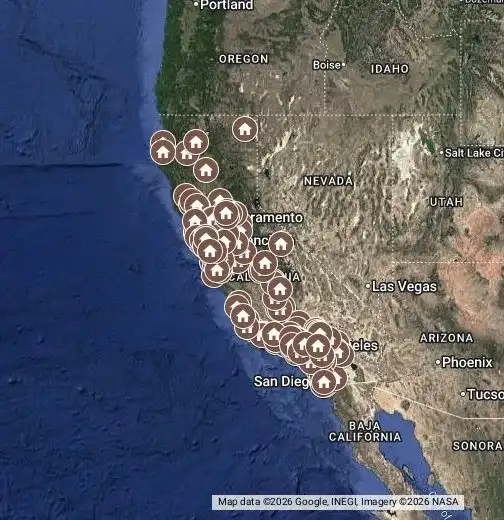
From Redding to San Diego, our real estate partition attorneys have forced sales, negotiated buyouts, and divided equity for co-owners across California. Wherever your property is, there’s a good chance we’ve handled a case nearby.
Meet Your Partition Attorneys
Partition lawyers focused on one thing: ending co-ownership disputes over California real estate.

Scott Talkov

Katja M. Grosch

Olivia Dajee

Adeeb Djawad

Scott Resnick

Maya Rhode

Arthur “AJ” Duggan

Jordan Thomas

Greg Brown

Elaine Ouyang

Jennifer Price-Smith

Colleen Talkov
California Partition Lawyers Focused on Ending Your Dispute
Talkov Law is America’s first partition law firm. We represent California property owners who want to end a co-ownership dispute. Our 12 partition attorneys focus exclusively on partition actions, also called partition lawsuits, helping clients pursue a sale, negotiate a buyout, and resolve disagreements over the proceeds.
Our team has handled over 650 partition actions involving more than $450 Million in real estate sold or refinanced. Explore our case results, read client reviews, or watch our firm introduction.
Looking for a partition lawyer near you? We represent co-owners statewide from seven California offices, and a partition attorney will speak with you in a free 30-minute consultation. No fees until you win.
Is It Time to Call a Partition Action Lawyer?
You inherited property together
One sibling wants to sell while another refuses to leave or cooperate. Learn about selling inherited property when co-owners disagree.
Your relationship ended
You bought a home together, but now need to separate your property interests. See examples of co-ownership disputes and how partition can help.
Your co-owner refuses to sell
A family member, friend, or investment partner will not agree on what to do with the property. A partition lawsuit asks the court to end the deadlock by ordering the property sold or divided.
You paid more than your share
You covered the down payment, mortgage, taxes, or repairs. We evaluate those contributions as part of the accounting and reimbursement claims.
Cases Our Real Estate Partition Lawyers Handle
From inherited estates to high-value commercial holdings, our attorneys handle every category of co-ownership dispute across California.
Inherited Property Partitions
Heirs often disagree on whether to keep, sell, or manage an inherited property. When co-owners cannot reach an agreement, a partition action allows for the sale or division of the property fairly.
Family-Owned Property Partitions
Properties passed down through generations often become the center of family disputes. A partition action offers a path to resolution while minimizing family tension.
Ex-Boyfriend / Ex-Girlfriend Disputes
Unmarried couples who purchase property together often face disputes when the relationship ends. We help resolve ownership conflicts and force a sale when one party refuses to cooperate.
Residential Partitions
Co-owning a house, condominium, or family home gets complicated when owners disagree on selling, buying out, or keeping it. We resolve residential disputes at every price point with discretion and a clear strategy.
Commercial Partitions
Business partners or co-owners of commercial properties may disagree on management, rent collection, or sales. Our firm ensures commercial real estate is fairly divided or sold to protect your investment.
Farmland Partitions
When co-owners disagree about a farm, ranch, vineyard, or orchard, the land, water rights, and operations are all at stake. We help divide, sell, or buy out agricultural property.
Multi-Property Partitions
When co-owners hold multiple properties together, whether investment homes, rental units, or family-owned assets, dividing or selling them requires careful legal strategy to maximize value.
High Value Partitions
For luxury homes and properties with significant equity, disputes can become particularly complex. We protect our clients’ financial interests, ensuring a fair resolution without unnecessary delays.
What Is a Partition Lawyer and What Do They Do in California?
A partition lawyer is an attorney who represents co-owners of California real estate in a partition action, the lawsuit that ends a co-ownership when the owners cannot agree. If you share title to a home with a sibling, a former partner, a friend, or an investor and the other owner will not sell, a partition lawyer gets you out through a court-ordered sale or a buyout at a fair price, with the money divided according to California law. “Partition lawyer” and “partition attorney” mean the same thing. A partition lawyer runs the case from the first letter to the final distribution of the sale proceeds.
Because California treats the right to partition as absolute, the question is rarely whether the co-ownership will end. The questions that matter are how it ends, how fast, and how much each owner walks away with after the partition offsets and accounting.
What Kind of Attorney Do You Need for a Partition Action?
You need a partition attorney: a litigator who handles partition actions regularly rather than as a side practice. A general real estate lawyer handles leases, easements, and contract disputes. A partition lawyer handles one thing, ending a co-ownership in court when the owners cannot agree, and the difference shows in the details: how lenders are named in the complaint, how the buyout deadlines run, how the sale is handled, and how credits are proved in the accounting. Partition combines real property law, civil procedure, a court-supervised sale, and an equitable accounting, and a general real estate or probate attorney may handle only a few of these cases in a career.
How a Partition Lawsuit Works, From Dispute to Resolution
- Review the property and your goals. Your partition action attorney assesses ownership, the dispute, and whether you want to sell your interest or keep the property through a buyout.
- Pursue a sale or settlement. We negotiate a resolution and, when needed, pursue a court-ordered partition by sale. A partition referee may oversee the sale.
- Resolve how the proceeds are divided. We address ownership shares, claimed reimbursements, and attorney’s fees through settlement or court proceedings.
For details, start with What Is a Partition Action? or explore the guides below.
Answers to Your Partition Questions
All guides & articles →-

Partition Costs
What drives the cost of a California partition action, and who ends up paying.
Read guide → -
How Long It Takes
How long a California partition action takes, and what speeds it up.
Read guide → -
Forcing the Sale
How to force the sale of a house you co-own, even if your co-owner refuses to sell.
Read guide →

How to Find the Right Partition Attorney
Co-owners in a partition action almost universally want the same thing: the best result in the least amount of time with the lowest attorney’s fees. Look for these signs that you have found the right partition attorney:
Experience in partition actions
It saves you money and headaches by ending the dispute faster. Our 12 dedicated partition attorneys have handled over 650 partition actions.
Experience in real estate litigation
Your attorney should be able to solve every real estate issue that comes up in a partition sale, including quiet title issues, escrow problems, subpoenas to banks, and the real estate accounting used to calculate damages.
Reasonable fees
There are attorneys whose cases drag on for years and generate fees that benefit only the attorney. Our reviews make clear that we know how to resolve these disputes promptly.
Success in settlement and negotiation
Many attorneys boast of their trial experience, even though about 98% of partitions are settled before a trial. Settling saves clients considerable amounts in attorney’s fees. Look for an attorney who can calculate the probable financial outcomes of the case to aid in a reasonable settlement.
A winning strategy
During your consultation, ask how the attorney plans to litigate the case and win your partition action. If the strategy is to file the complaint and just see what happens, run, don’t walk. Our attorneys implement a plan to solve the disputes in the case and determine the appropriate values for any offsets.
Satisfied client reviews
Look for a track record of success in partition actions specifically. Read the five-star reviews and case results from Talkov Law clients.
When comparing lawyers, ask these questions:
- How many partition actions have you handled, and how did they end?
- How would the Partition of Real Property Act buyout and the offsets apply to my property?
- What do you do when a co-owner delays by refusing access or ignoring court orders?
- Will you push for a sale, a buyout, or a settlement, and why?
- How are your fees paid, and what happens to them if the case settles early?
- Who in your office will work on my case day to day?
Frequently Asked Questions About Partition Lawyers
Do you need a lawyer for a partition action?
Not always. California does not require an individual who co-owns real estate to hire a lawyer to file or defend a partition action. Code of Civil Procedure section 872.210 lets a co-owner bring the case, and you may speak for your own share in court, but not for anyone else’s unless you are an active member of the State Bar. (Hansen v. Hansen (2003) 114 Cal.App.4th 618, 621; Business and Professions Code section 6125.) You must hire a lawyer when:
- A limited liability company or a corporation owns the property. A corporation cannot appear in court on its own or through an officer who is not a lawyer (Merco Constr. Engineers, Inc. v. Municipal Court (1978) 21 Cal.3d 724, 729), and a limited liability company must hire a lawyer in the same way.
- An executor or personal representative acts for an estate. In a case about a home the estate co-owned, the Court of Appeal held that an executor’s partition petition was a claim for the benefit of the estate’s beneficiaries and could not be prosecuted without a lawyer, and it dismissed her appeal (Estate of Sanchez (2023) 95 Cal.App.5th 331, 339). See Probate Code section 9823 for the personal representative’s power to bring a partition action.
- A trustee acts for a trust. A trustee who litigates for the trust is representing the beneficiaries’ interests, so a nonlawyer trustee must hire a lawyer (Ziegler v. Nickel (1998) 64 Cal.App.4th 545, 548). That matters for any co-owned house that was put into a trust.
- You would be acting for another owner. A relative or friend who is not a lawyer cannot appear for you, and an agent under a power of attorney does not become your lawyer by virtue of the power of attorney (Ziegler, at p. 548).
Even when you may go without one, the court holds you to the same rules and deadlines as a lawyer: the title report and complaint, the lis pendens, service on every owner and lender, the 45-day buyout deadline under the Partition of Real Property Act, and proof of every credit in the accounting. A lender who was never served, a missed deadline, or a credit left out of the final accounting can cost far more than a lawyer would have, and a co-owner who is fighting the case will usually have one. If you are the one who was sued, the summons sets a short deadline to respond. Start with what to do when your co-owner filed a partition action against you.
How much does a partition lawyer cost?
The average partition action costs about $20,000, although the cost may be much higher or lower depending on the complexity of the case and how much the other co-owners resist. The law also spreads the burden. Under Code of Civil Procedure section 874.010, the costs of partition include reasonable attorney’s fees incurred or paid by a party for the common benefit, and the court apportions those costs among the owners in proportion to their interests or in another equitable way under CCP 874.040’s rule on apportioning costs. In practice, the cost of moving the sale forward is generally paid from the sale proceeds and shared by the owners, and the court has room to assign more of it to a co-owner whose resistance drove it up. At Talkov Law, there are no fees until you win. See who pays for a partition action.
How long does a partition action take with a lawyer?
Seven to nine months is the usual time it takes to resolve a partition action, although timing depends on the county, whether the other side contests the case, and whether the Partition of Real Property Act buyout applies. Co-owners who hire a lawyer without partition experience may find that it takes much longer. Many cases settle once the co-owner sees the case moving forward, often through a negotiated buyout or co-listing the property.
Can a partition lawyer force my co-owner to sell?
In most cases, yes. Partition between co-owners is “as of right unless barred by a valid waiver” under Code of Civil Procedure section 872.710(b), and California courts treated a tenant in common’s right to partition as ordinarily absolute long before the current statute. (Priddel v. Shankie (1945) 69 Cal.App.2d 319, 325.) A co-owner cannot stop the case just by refusing.
Can a partition lawyer help me keep the house?
Yes. If you want to keep the property, a partition lawyer can pursue a buyout of the other owners instead of a sale. See our guide to buying out a co-owner.
What is the difference between a partition lawyer and a partition referee?
A partition lawyer represents you. A partition referee is a person the court appoints to divide or sell the property as the court orders under Code of Civil Procedure section 873.010. The referee does not represent any owner.







