
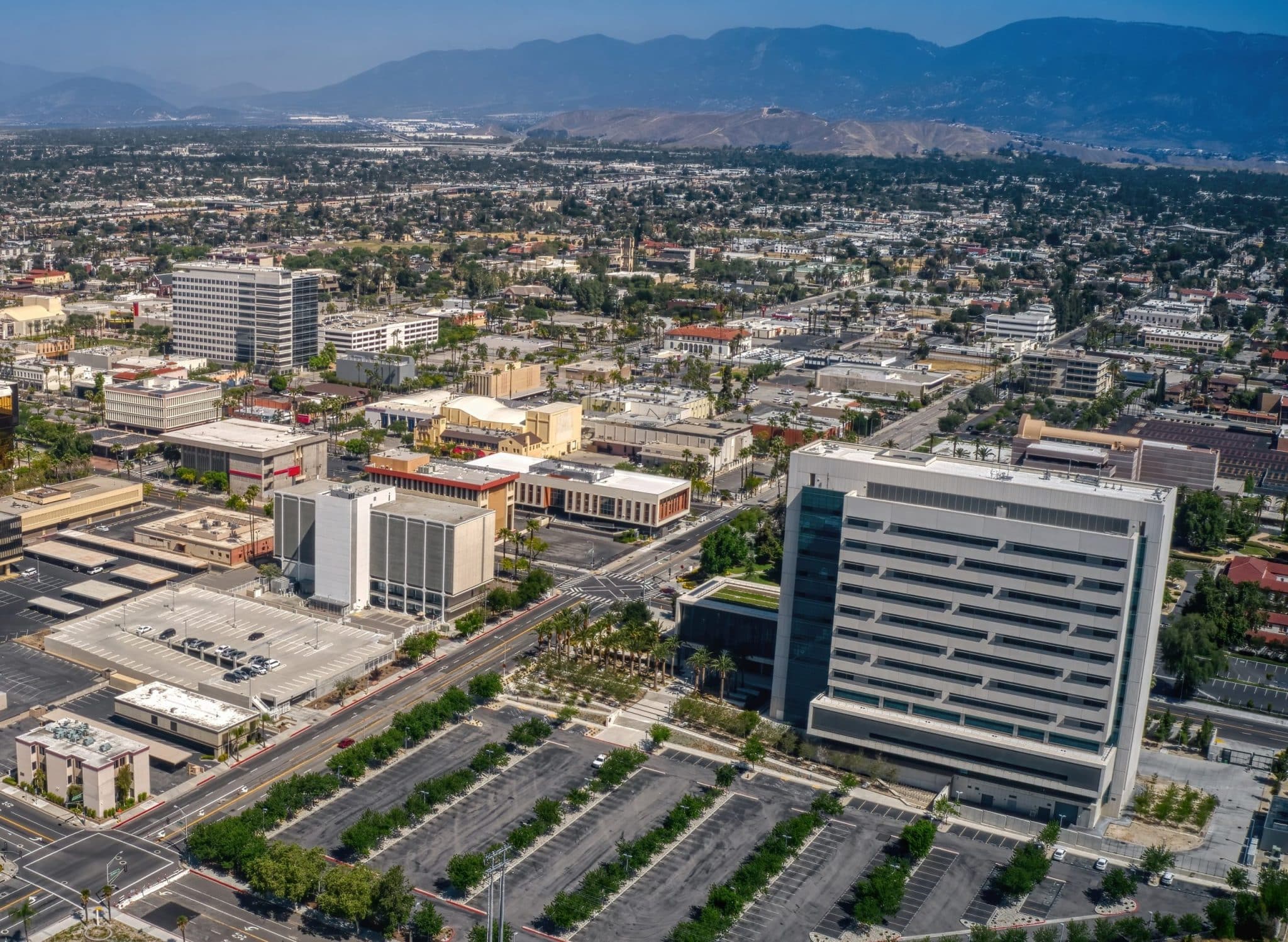
San Bernardino Partition Attorney
Stuck sharing a house, cabin, or parcel with a co-owner who won’t cooperate? We get you out. California’s only firm devoted entirely to partition — serving the city of San Bernardino and every corner of the county, from Ontario to Big Bear to the High Desert.
12
Partition Attorneys
650
Partition Actions Handled
$400 Million
Co-Owned Real Estate Resolved
Free Consultation
Request Your Free Consultation
Tell us about your co-ownership situation and we’ll follow up with the next best step. Do not include confidential information in this form.
Across Talkov Law
150+ Five-Star Reviews Across Our California Offices.
See Why Clients Recommend Talkov Law.
The Talkov Law firm was a pleasure to work with. They were very knowledgeable in the whole process and explained all the steps that they were taking. Scott and Colleen were the best. She accomplished exactly what I wanted and gave me a peace of mind that they would get it done. Colleen took all the right steps in ensuring the best outcome. The whole team at Talkov were professional. I couldn't have asked for a better team to help with my case. Everyone there was willing to help with any questions i had. I would refer them to anyone who wants a team that knows exactly what they are doing and that is transparent. If i ever need another Law firm in the future, I will be calling them to help. Thank you again Talkov Law firm for helping with my Partition.
Jonathan ScocchioAs a fellow attorney I have found that Scott Talkov at Talkov Law is very knowledgeable of partition law and procedure. If I were looking for help in a partition action, I would have no reservation in recommending him.
Antonio MaldonadoThank you Olivia and the Talkov team for all your efforts in resolving our partition action case. Definitely recommend !
Eric TruongTalkov Law
Serving San Bernardino
San Bernardino City & County
The city of San Bernardino is the county seat and the center of a county that stretches from the Inland Empire suburbs near Los Angeles County to the Nevada and Arizona state lines. Most of the co-owned property we see here is family property: houses passed down through a generation or two, cabins in the San Bernardino Mountains, and desert acreage bought decades ago and never sold.
When the owners stop agreeing, the property sits. One owner lives there or collects the rent while the others carry the risk, or nobody pays the taxes at all. A partition action is the court process that ends that standoff, and California gives every co-owner the right to bring one — including the right to force the sale of jointly owned property when one owner won’t agree.
Before we file anything, we look at what the property is worth, what each owner has paid, and whether a buyout would get you there faster. Owners who want to see the paperwork can review sample California partition action forms first.
Get a Free Case ConsultationSan Bernardino County · Inland Empire
San Bernardino Partition Lawyers for Shared Homes, Cabins, and Land
Whether the property is a starter home in Rialto, a rental in Rancho Cucamonga, or five acres outside Hesperia, the question is the same: how do you get your share out when another owner won’t move? We answer that in the first conversation.
Talkov Law handles partition and nothing else, for owners throughout the Inland Empire and the rest of California.
Free Consultation
Talk to a San Bernardino Partition Attorney Now
Tell us what you own and who you own it with. We’ll tell you how to get your share out.
Get a Free Consultation NowTalk Directly With a California Partition Attorney
Partition Actions in San Bernardino County
One County, Four Very Different Property Markets
San Bernardino County is the largest county by area in the continental United States, and the property our clients share here reflects that range. The same partition law applies to all of it, but the strategy for a city home looks nothing like the strategy for a mountain cabin or a desert lot.
The Valley. San Bernardino, Fontana, Rialto, Colton, Highland, Redlands, Loma Linda, and Yucaipa — mostly family homes and rentals, many of them inherited.
The Western Inland Empire. Ontario, Rancho Cucamonga, Upland, Chino, Chino Hills, and Montclair, where newer homes and investment properties carry higher values.
The High Desert. Victorville, Hesperia, Apple Valley, Adelanto, and Barstow, plus thousands of vacant acreage parcels held by families for decades.
The Mountains and Morongo Basin. Big Bear Lake, Lake Arrowhead, Crestline, Running Springs, Yucca Valley, Joshua Tree, and Twentynine Palms, home to shared cabins and vacation rentals.
Why Co-Owners in San Bernardino Call Us
Some situations come up here again and again:
- A parent’s house in San Bernardino or Fontana passes to several children, one sibling moves in, and the rest receive nothing — often the point where heirs ask whether all heirs must agree to sell.
- A Big Bear or Lake Arrowhead cabin shared by relatives earns short-term rental income, and nobody agrees on who keeps it or who pays for upkeep.
- A rental in Ontario or Rancho Cucamonga bought by friends or former partners, where one owner wants to cash out and the other wants to hold.
- Vacant desert acreage owned by a dozen cousins, some of whom can’t be found.
- A co-owner stops paying the mortgage or stops paying the property taxes, and the others are left covering the bills to protect their credit.
Each of these ends the same way under California law: any owner on title can ask the court to order a division or sale, and no other owner can veto it.
What Happens After We File
A partition is a lawsuit, but it follows a predictable track. Knowing how long a partition action takes and what each step involves takes much of the fear out of it.
-
Every owner is brought into the case
We name and serve all co-owners and anyone else with a recorded interest. For an owner who truly can’t be located, the court can allow notice by publication, which matters for those desert parcels with scattered heirs.
-
The court confirms the shares
Once the right to partition is established, the judge enters an interlocutory judgment stating what percentage each owner holds and how the property will be partitioned. For nearly every house and cabin, that means a sale.
-
A referee runs the sale
The court appoints a neutral partition referee, often a local real estate agent, to list and sell the property on the open market. Before or during that process, an owner can usually make an offer to buy the others out.
-
Credits are settled and the money is paid out
The sale proceeds pay off the loans and costs of the case, then the court applies each owner’s credits before releasing what is left.
Rental Income, Unpaid Bills, and the Final Split
In San Bernardino County, the money fights usually center on who paid and who collected. A co-owner who covered the mortgage, taxes, and insurance alone can ask to be reimbursed from the sale. Rent from a tenant, or short-term rental income from a mountain cabin, has to be shared. Our guide to credits and reimbursements in a partition explains how courts sort this out, and we build those numbers into the case from the start so they are not left to the end.
The same goes for property with tenants in place: we explain whether you can partition a rental property with tenants and how the leases affect a sale.
Is Partition Worth It on a Low-Value Desert Parcel?
Sometimes it is not, at least not as a first step. On a vacant lot worth less than the likely cost of a partition action, we look first at a buyout, a sale of your share to the other owners, or a negotiated listing. When filing does make sense, it is often because one holdout is blocking a sale everyone else wants. We will tell you which side of that line your parcel is on before you spend anything.
Partition Lawyers Who Know the Inland Empire
We do partition work and nothing else. The firm has handled 650 partition matters, and in 17+ years no partition it has pursued has been denied. San Bernardino County cases are handled by our full-time partition attorneys, with offices across California, including Riverside, a short drive away.
Partition actions here are filed in the Superior Court of California, County of San Bernardino, at the San Bernardino Justice Center on West Third Street or another courthouse in the county. You don’t need to live in the county to bring one; many of our clients inherited property here while living elsewhere.
Beyond the county, we also represent co-owners in Riverside, Los Angeles, Orange County, Kern County, and across Southern California. For local detail, see our pages for Rancho Cucamonga, Ontario, Victorville, and Hesperia.
San Bernardino Partition Questions
My brother lives in Mom’s house and won’t leave. Do I have to wait until he agrees?
No. Living in the house gives him no power to block a partition. You can file, and the court can order the home sold or let one of you buy out the other at fair value.
We share a cabin in Big Bear that we rent out. Who gets the rental income?
Rental income belongs to all owners according to their shares, after legitimate expenses. If one owner has been keeping it, that is accounted for when the sale proceeds are divided.
Some of the owners of our desert land can’t be found. Can we still partition it?
Often, yes. Missing owners must still be named, but the court can allow notice by publication after a diligent search, and their share of the proceeds is protected for them.
Will the property sell for a fair price?
Partition sales are usually handled on the open market through a referee, not at a courthouse auction. Our article on whether a partition sale brings fair market value explains how owners protect the price.
What if the property was inherited by several family members?
Inherited property may fall under the Partition of Real Property Act, which adds an appraisal and gives family co-owners a first chance to buy out anyone who wants a sale.
Our attorneys also handle partition actions in nearby Moreno Valley and, farther east, in Palm Springs. For a wider view of the region, see our Inland Empire page.
Get a Straight Answer on Your San Bernardino Property
Tell us who owns it and what has gone wrong. We’ll explain your options, the likely timeline, and what you could walk away with, at no charge.
Get a Free Case ConsultationOr call (909) 577-3300







